
George
Houyoux
Transmitting Belgian literature through books, artistic friendship and demanding production values.
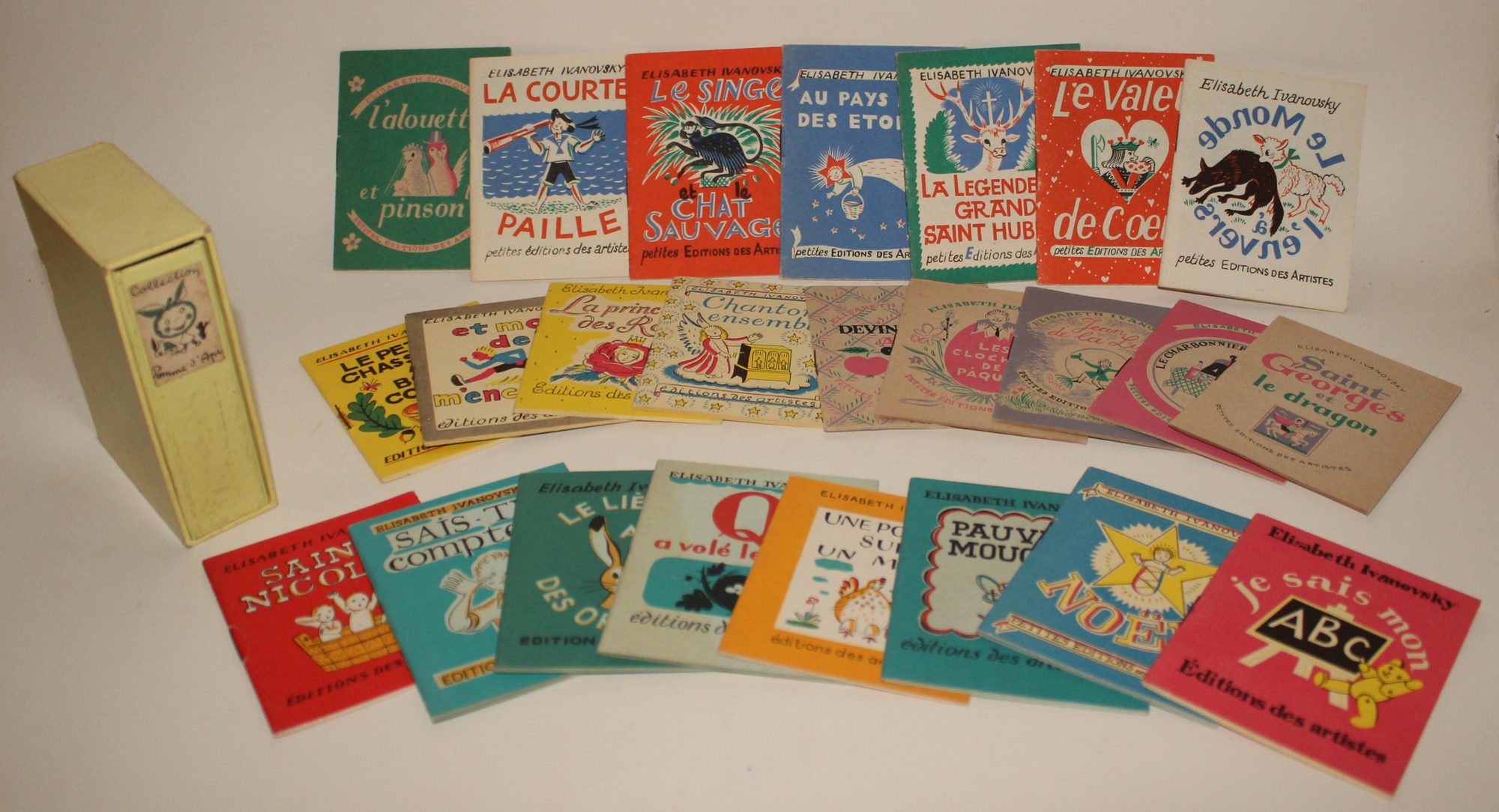
The elder brother, the poet of the family
George Houyoux was born on 1 February 1901 in Uccle. Maurice’s elder brother, he is described in the family archives as the poet of the family. After beginning studies in chemistry and then science, he left that path for books. In Paris, he associated with the Crommelynck brothers, worked at Gründ, then opened a bookshop on rue Sainte-Anne specialising in first editions of French and Belgian poets. Back in Brussels, he founded the Éditions des Artistes in 1935 and built a catalogue that encompassed poetry, theatre, novels, essays, children’s books and bibliophile editions.
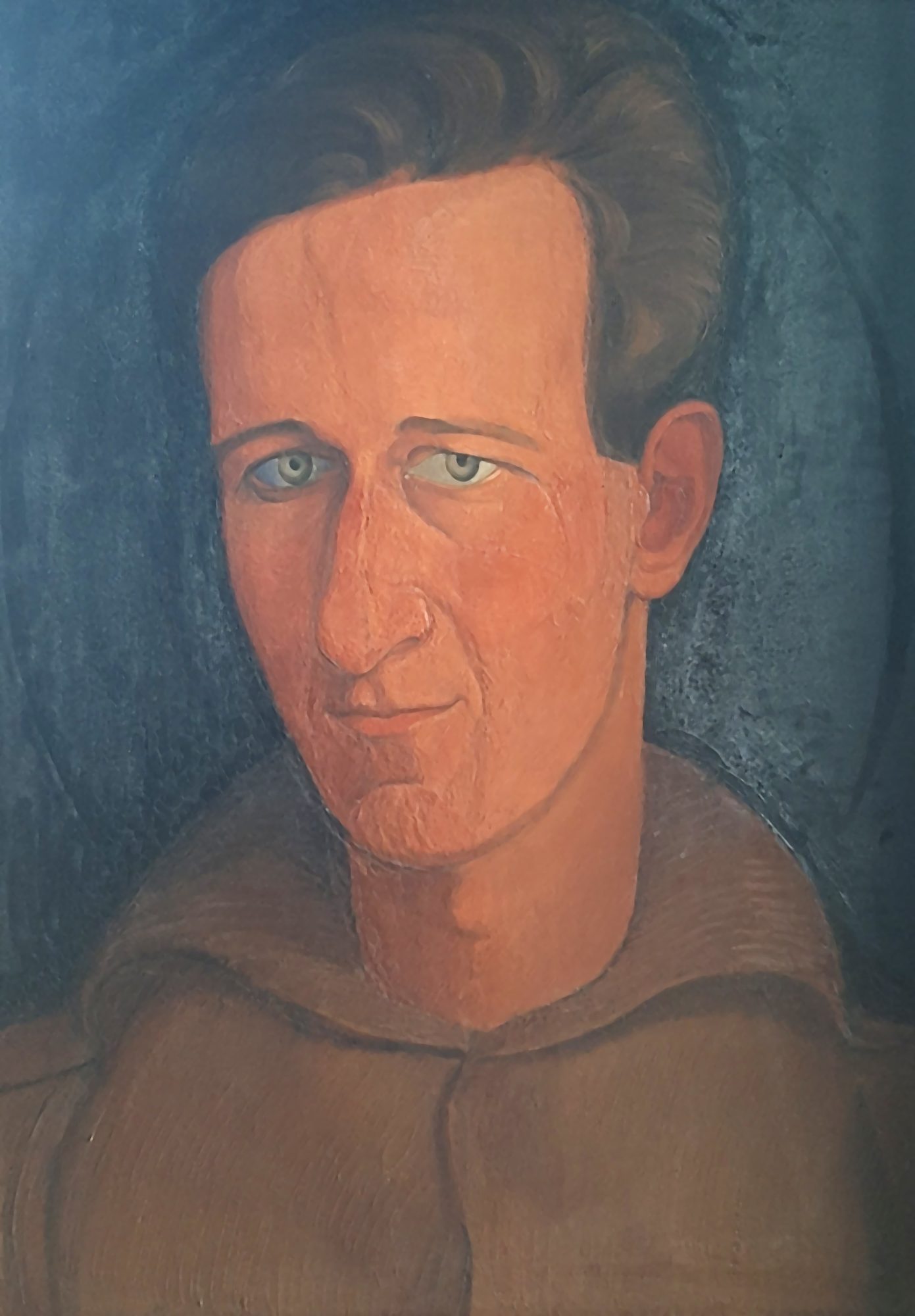
George Houyoux by Marcel Broodthaers
This photograph of George Houyoux, taken by Marcel Broodthaers in 1960, has particular resonance because it connects two moments: the still-active publisher, devoted to poetry and rare books, and Broodthaers, who had just published Minuit with Houyoux before turning, a few years later, towards a major artistic practice. The photograph thus becomes a document of passage between literature, publishing and contemporary art.
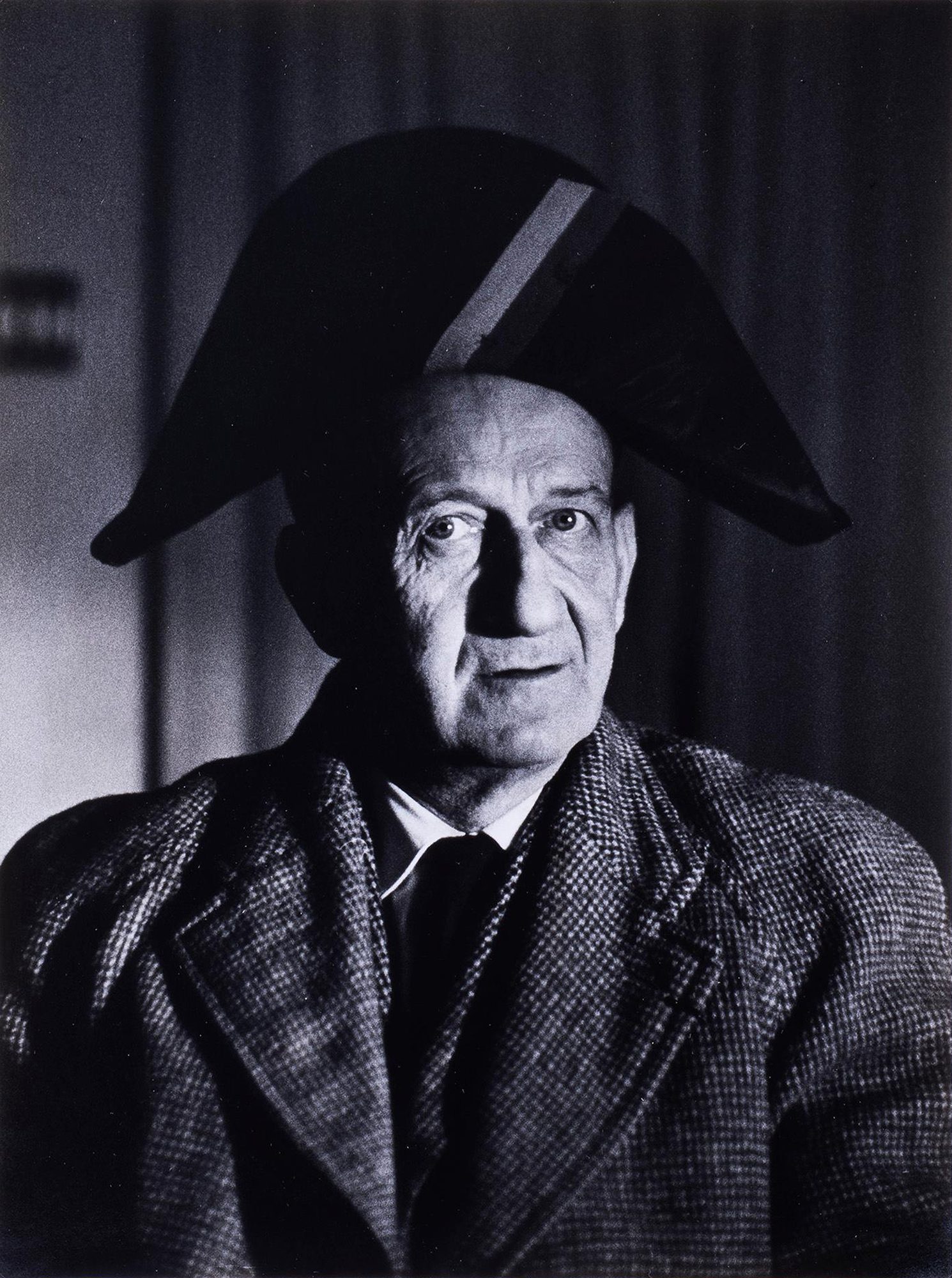
Les Contes d’Horace Van Offel
After Cloche interdite and Ogives, George Houyoux published his first major bibliophile book in 1935. Les Contes d’Horace Van Offel brings together 22 short stories, each accompanied by an engraving. The edition was limited to 396 copies, including copies on Japanese nacre paper. The book gathers a constellation of interwar artists, from James Ensor to Léon Spilliaert, Frans Masereel, Albert Crommelynck, Edgar Tytgat and Maurice de Vlaminck. It is a statement of intent: for Houyoux, the book must become a literary and visual manifestation of the highest standards.


Les poèmes d’Odilon-Jean Périer
Les Poèmes d’Odilon-Jean Périer appeared with six original lithographs by Albert Crommelynck. Périer, who died prematurely at 27, had published several collections, a novel and contributed to several reviews, including the NRF. The year 1937 also marked George Houyoux’s recognition: in Paris, he received a gold medal at the Exposition Internationale des Arts et Techniques, rewarding the best French-language publisher for his overall production. The connection extends into public space: the Poet’s Fountain, designed in 1949 by Maurice Houyoux and Joseph Diongre, honours Odilon-Jean Périer at the entrance to the Bois de la Cambre.


La Servante au miroir
Marcel Lecomte, close to the Belgian avant-gardes, the modernists of Sept Arts and later Surrealism, published La Servante au miroir with George Houyoux: four stories adorned with seven drawings by Léon Spilliaert. Lecomte was attentive to surprises, coincidences and the power of the instant; he saw in art a magic mirror. The edition therefore brings together two major sensibilities: Lecomte’s writing and Spilliaert’s graphic universe. George Houyoux here confirms his role as a mediator between Belgian literature, drawing, carefully made books and networks of artists.

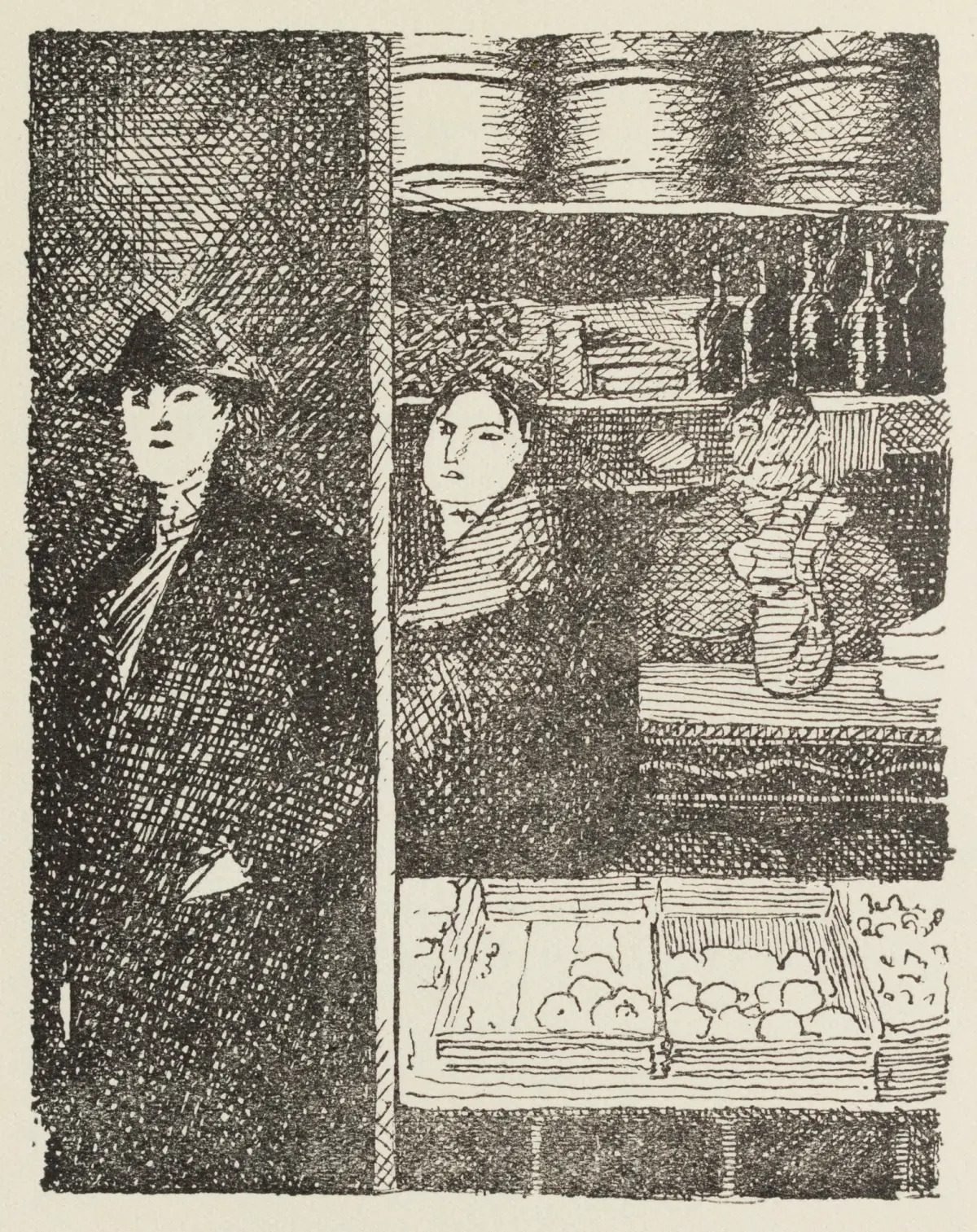
Pomme d’api collection
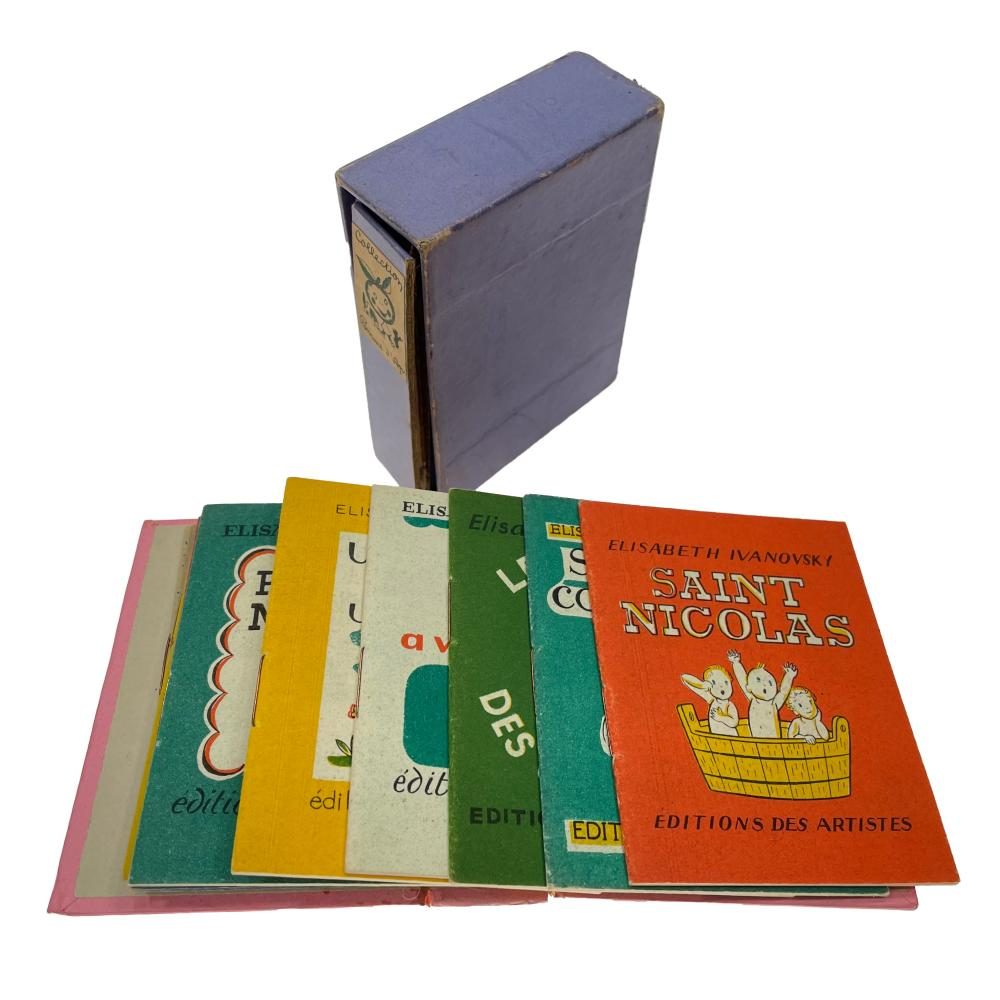
During the war, the Éditions des Artistes moved significantly towards children’s literature. George Houyoux published 37 books for young readers, including 32 between 1940 and 1945. Élisabeth Ivanovsky played a central role, creating two children’s collections, Sans souci and above all Pomme d’api. The latter stands out for its format, economy of means and graphic inventiveness in a context of shortage. The 24 small Pomme d’api books form a true miniature library: lively, popular and immediately recognisable.


Alphabet sentimental
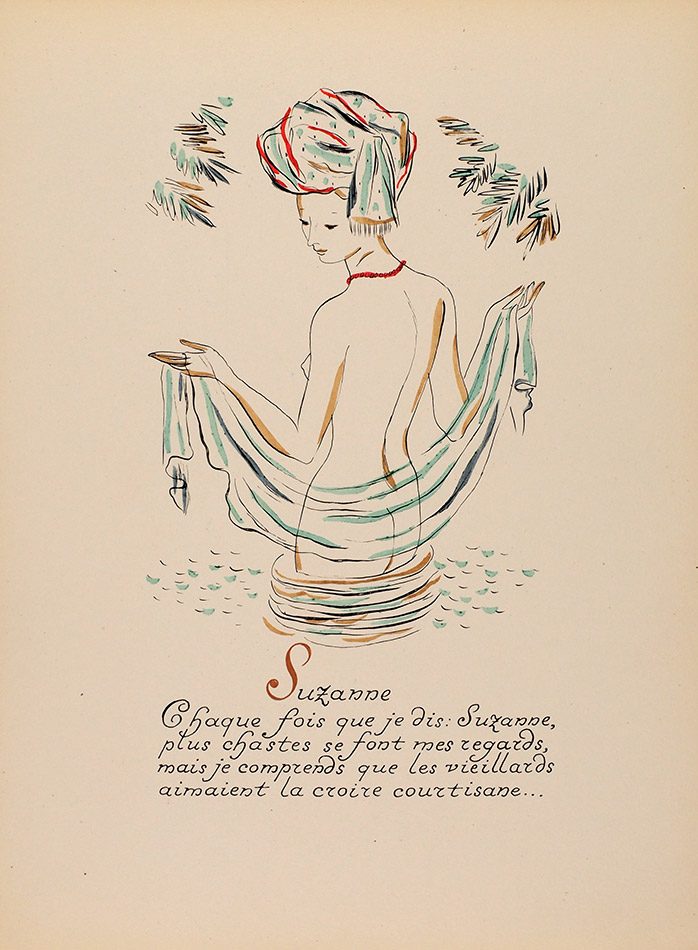
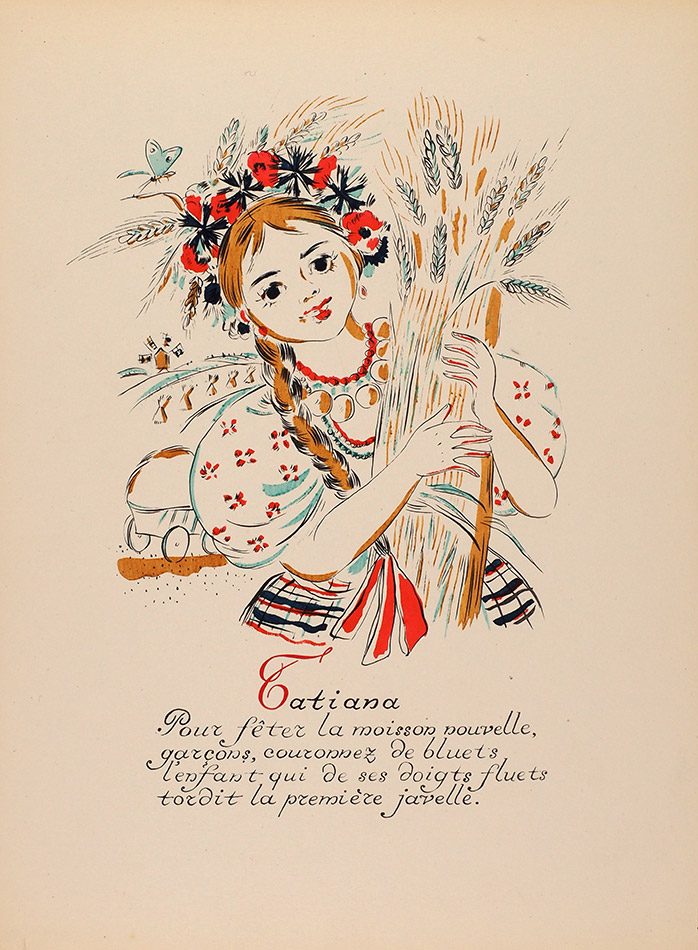
Alphabet sentimental, set into quatrains by Benoît Braun, illustrated by Élisabeth Ivanovsky and prefaced by Paul Fierens, belongs to the line of work in which the children’s book becomes a field for graphic invention. The book combines letter, image, wordplay and decorative elegance. Ivanovsky turns the alphabet book into a sensitive, almost ceremonial object, where each letter becomes a small theatre. For George Houyoux, this kind of edition proves that children’s books are not secondary: they can be as demanding, constructed and visually ambitious as a bibliophile work.

Du pain noir et des roses
Du pain noir et des roses gathers aphorisms by Marcel Havrenne, with a foreword by Jean Paulhan. Havrenne belonged to a very active Belgian poetic milieu, attentive to crossings between Surrealism, Dada, CoBrA and Phantomas. The book condenses a brief, dense thought made of images and tensions. It shows George Houyoux’s enduring taste for demanding, minority texts, sometimes difficult to place commercially, but essential in a map of Belgian literature.

La Manivelle du Château
With La Manivelle du Château, Paul Colinet gives the La Tarasque collection a singular verbal energy. Colinet rejects utilitarian language: words must no longer merely serve, they must awaken their sleeping doubles. The text feeds on unexpected images, absurd associations and a freedom close to Surrealism. Here George Houyoux published a book perfectly aligned with his philosophy: an edition for texts he valued, without yielding to commercial obviousness.


Minuit, Marcel Broodthaers
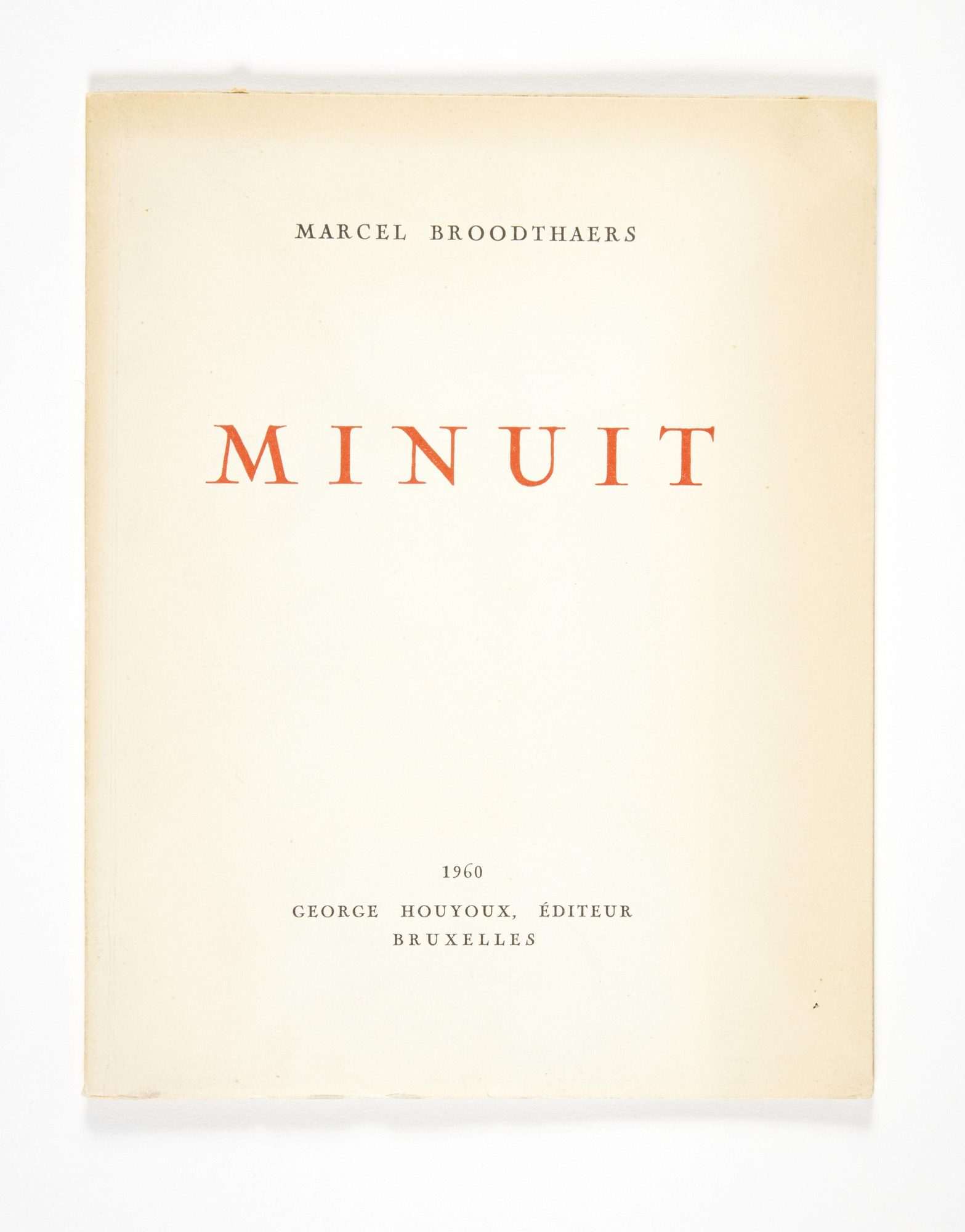
Minuit was published in 1960 by George Houyoux, when he had a branch in Paris. It is the first and only collection that Marcel Broodthaers did not publish at his own expense. Its initial title was Une tache d’ancre; the printer Henri Kumps even made a small error on certain copies, with a double impression of the title on the cover. The print run was 225 copies, including a dozen more luxurious ones with an original watercolour by Serge Vandercam as frontispiece. Today the book has particular importance in light of Broodthaers’s later trajectory as a major figure of twentieth-century art.



Bibliography
- Académie royale des sciences, des lettres et des beaux-arts de Belgique, Nouvelle biographie nationale, tome 13, 2016, p. 183-185.
- Notice “George Houyoux”, dans Delzenne Yves-William et Houyoux Jean, Le Nouveau Dictionnaire des Belges, Bruxelles, Le Cri, 1998.
- Gérard Catherine, George Houyoux, Éditeur. Essai de catalogue des Éditions des Artistes, mémoire, 1994-1995.
- Quaghebeur Marc, Éléments pour une étude du champ littéraire belge francophone de l’après-guerre, Textyles, hors série n°2, 1997.
- Klinkenberg Jean-Marie et Denis Benoît, La Littérature belge, Espace Nord, 2005.
- Robert Paul, Histoire de la littérature belge, Partie IV : 1940-1960.
- Quaghebeur Marc, Littérature et fonctionnement idéologique en Belgique francophone, dans La Belgique malgré tout, 1980.
- Trousson Raymond, Cels Jacques, De Decker Jacques, Engel Vincent, Goosse André, Delsemme Paul, 1920-1995, un espace-temps littéraire, 1995.
- Meurant Georges, Elisabeth Ivanovsky. Sur la page blanche, tout est possible, MeMo, 2017.
- Picaud Carine, Élisabeth Ivanovsky. Une vie de dessins, Revue de la BNF, 2016/2.
- Richter Florence et Ost François, La Tribu Bodart-Richter, Entre écologie et poésie, AML, 2023.
- Defourny Michel, Le livre et l’enfant, De Boeck Supérieur, 2009.
- Dozo Björn-Olav et Provenzano François, Historiographie de la littérature belge, ENS Éditions, 2014.
- Defourny Michel et Pinhas Luc, Situations de l’édition francophone d’enfance et de jeunesse, L’Harmattan, 2008.
- Verstraete-Hansen Lisbeth, Littérature et engagements en Belgique francophone, P.I.E.-Peter Lang, 2006.
- Hellens Franz, Documents secrets, 1905-1956, Albin Michel, 1958.
- Delève Ernest, étude d’Edmond Kinds, Seghers, 1973.
- Palais des Beaux-Arts, Les Beaux-Arts, numéros 173-212, 1935.
- Peignot Charles (dir.), Arts et métiers graphiques, numéros 51-55, Hachard et cie., 1936.
- Sojcher Jacques, La Belgique malgré tout, Éditions de l’Université de Bruxelles, 1980.
- Houbart-Wilkin Suzanne, Marcel Lecomte aux Musées royaux des beaux-arts, Bulletin des Musées royaux des beaux-arts de Belgique, 1970.
- La Revue de Paris, numéros 1-6, 1969, à propos des Poèmes du dimanche.
- Société des bibliophiles et iconophiles de Belgique, Le Livre et l’estampe, volumes 50-51, 2004.
- Magazine littéraire, Le courrier de la poésie, numéros 84-95, 1974.